
Do I Still Need to Test for Covid?
Yes. COVID-19 testing can still help you decide what to do when you feel sick, have been exposed, or plan to spend time with someone at higher risk. A result can guide precautions and help you seek treatment early when needed. Triad Primary Care offers COVID-19 testing in Greensboro, NC. Our team can evaluate your symptoms to determine whether a rapid antigen test or a comprehensive respiratory panel is right for you. For more information, contact us or book an appointment online. We are conveniently located at 1309 Lees Chapel Rd., Greensboro, NC 27455.
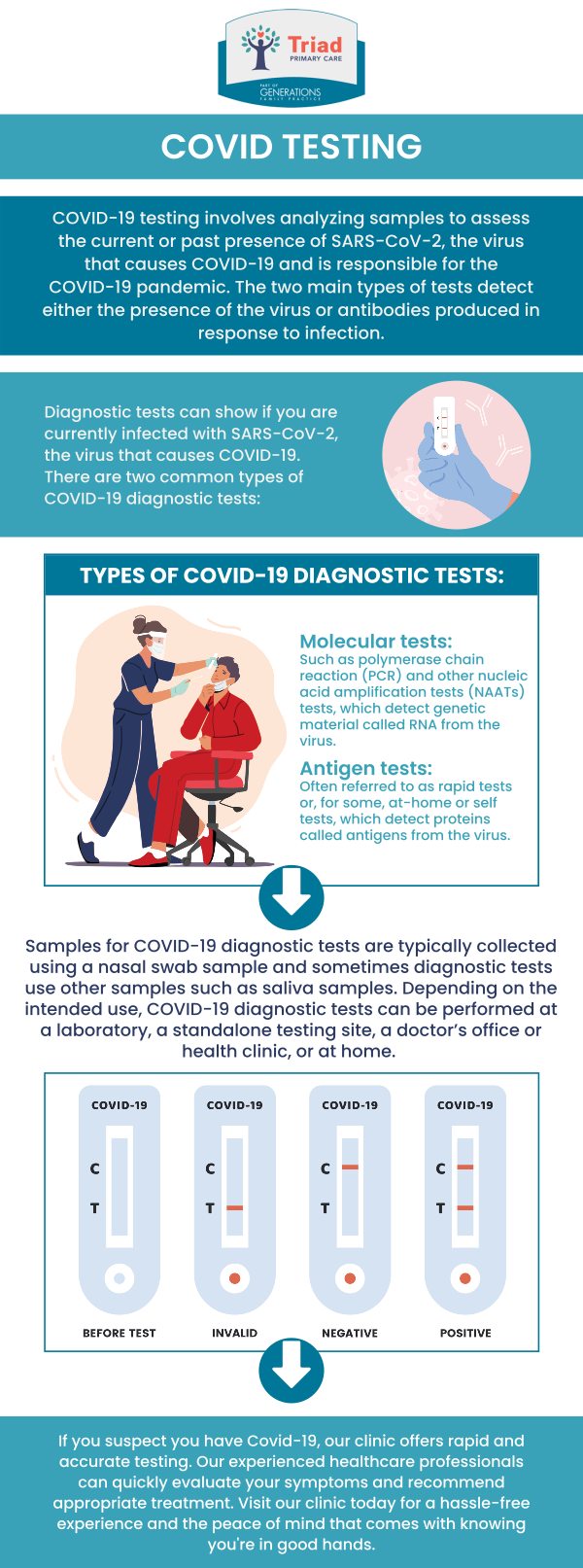
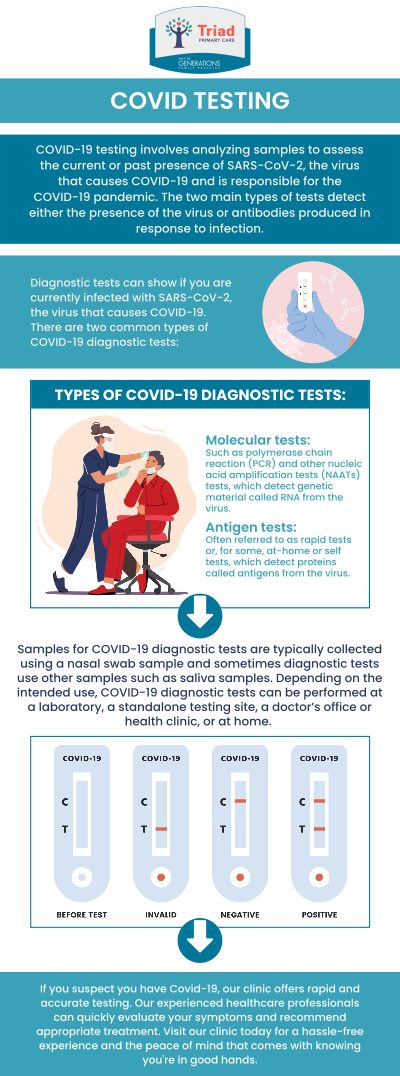
Table of Contents:
What should I expect during a COVID-19 test at Triad Primary Care?
What is the difference between a rapid antigen test and a PCR test?
How is a COVID-19 test performed?
Do I need to prepare before a COVID-19 test?
Should I get tested after being exposed to someone with COVID-19?
Can I have COVID-19 without symptoms?
Can I use COVID-19 testing before visiting someone who is high risk?
How accurate are rapid COVID-19 tests?
Can a COVID-19 test give a false-negative result?
Should I repeat a rapid COVID-19 test after a negative result?
What does a positive COVID-19 test mean?
What should I do after testing positive for COVID-19?
When should I contact a healthcare provider after testing positive?
When should COVID-19 symptoms be treated as an emergency?
Can a COVID-19 test tell whether I have the flu or RSV?
Can I have COVID-19 and another respiratory infection at the same time?
Does a negative COVID-19 test mean I can no longer spread an illness?
Why can early COVID-19 testing matter for high-risk patients?
COVID-19 Testing at Triad Primary Care
Medical References
A COVID-19 test is usually a brief visit focused on collecting a respiratory sample and determining whether SARS-CoV-2 is present. Depending on the test being used, a healthcare professional may collect a sample from the inside of the nose with a swab. The collection itself generally takes only a few moments. Some people describe mild pressure, tickling, watering of the eyes, or an urge to sneeze, but the discomfort is usually temporary.
Triad Primary Care offers both antigen and PCR testing. An antigen test looks for viral proteins and may provide a result quickly, while a PCR test looks for the virus’s genetic material and is generally more sensitive. The type of test that may be most useful depends on the reason for testing, whether symptoms are present, when those symptoms began, and whether a previous rapid test was negative. Patients should also be prepared to share the timing of any recent exposure and any home-test results, since those details can help place the result in the proper clinical context.
Rapid antigen and PCR tests both look for evidence of a current COVID-19 infection, but they detect different parts of the virus. Antigen tests detect specific viral proteins. They can be useful because results are often available quickly, making them practical for people who need timely information. However, antigen tests are less sensitive than molecular tests and may miss an infection when the amount of virus is still low, especially very early in illness.
PCR tests detect viral genetic material and can identify smaller amounts of the virus. That higher sensitivity is helpful when there is a strong reason to suspect COVID-19 despite a negative rapid test. A positive PCR result can sometimes remain detectable after a person is no longer in the earliest phase of illness, so results should always be interpreted together with symptoms and timing. The best choice is not simply the test that is ‘more accurate’ in general, but the test that fits the clinical question and the timing of the illness.
Many COVID-19 tests use a nasal swab to collect a sample from the respiratory tract. During the collection, the swab is inserted into the nostril and rotated or moved according to the instructions for the specific test. Some collection methods sample only the front part of the nose, while others may reach farther into the nasal passage. The exact technique depends on the test system being used.
After collection, the sample is processed either as an antigen test or a molecular test such as PCR. The test itself does not diagnose every possible cause of respiratory symptoms; it only looks for evidence of SARS-CoV-2. If a patient has significant symptoms and the COVID-19 test is negative, additional evaluation may still be needed for influenza, RSV, bacterial infection, or another condition. A healthcare professional may use the test result together with the patient’s symptoms, medical history, and examination findings to decide what further care may be appropriate.
Most nasal COVID-19 tests require little preparation. Patients usually do not need to fast or change their usual routine before the test. However, it is helpful to follow any specific instructions given by the clinic because collection requirements can vary by test type. Bringing a list of current symptoms and knowing when those symptoms started can make the visit more useful.
Patients should also be ready to share whether they have had a known recent exposure, whether they have already taken a home antigen test, and when that home test was performed. If the patient is at increased risk of severe COVID-19 because of age, immune status, or certain medical conditions, that should also be mentioned promptly. These details can affect how a negative result is interpreted and whether treatment or additional testing should be considered.
Testing may be useful after a known or suspected exposure, even if no symptoms have developed. The main challenge is timing. Testing immediately after an exposure may be too early because the virus may not yet be present in the respiratory tract at a level the test can detect. This is especially relevant for antigen tests, which are less sensitive than PCR testing.
If symptoms develop after an exposure, testing should be considered promptly. If an antigen test is negative, repeating the test as directed by current FDA guidance can reduce the chance of missing an early infection. People who plan to be around someone at higher risk of severe illness may also choose to use testing as one additional precaution. A negative test lowers uncertainty, but it does not provide a guarantee that infection is absent.
Yes. Some people infected with SARS-CoV-2 have no noticeable symptoms or only very mild symptoms. A person can therefore test positive even when they feel well. This is one reason exposure history and testing timing matter when deciding whether testing is useful.
An asymptomatic infection can still matter because a person may be capable of spreading the virus.
Someone who has recently been exposed may consider testing before close contact with a person who is older, immunocompromised, or otherwise at higher risk of serious illness. Because a single negative antigen test can miss an early infection, repeat testing may be needed when there has been a meaningful exposure and the result will affect decisions about close contact.
Yes. Testing can be one practical layer of protection before spending close time with someone who has a greater chance of developing severe illness from COVID-19. This may be especially relevant before visiting an older adult, someone who is immunocompromised, or a person with certain chronic medical conditions. Testing is most useful when combined with an understanding of recent symptoms and exposures.
A negative test should not be treated as an absolute guarantee that a person is not infected. Early infection can be missed, particularly by antigen testing. When there is recent exposure or new respiratory symptoms, postponing close contact may be safer than relying on a single negative test. Good ventilation, hand hygiene, masking when appropriate, and avoiding contact when sick can provide additional protection.
Rapid antigen tests can identify many active COVID-19 infections, especially when the amount of virus in the nose is high. They are useful because they are fast and convenient, but they are less sensitive than molecular tests such as PCR. That means a positive antigen test is often meaningful, while a negative test may need to be repeated depending on symptoms and timing.
Accuracy is influenced by several factors, including how early the person tests, how well the sample is collected, and how much virus is present at the time. A person who tests very soon after exposure or on the first day of symptoms may receive a negative result even though infection is developing. For this reason, FDA guidance supports serial antigen testing after a negative result. When the clinical suspicion remains high, PCR or another molecular test may provide additional information.
Yes. A false-negative result occurs when a person has COVID-19 but the test does not detect it. This can happen for several reasons. The test may have been performed too early, the amount of virus in the nose may have been below the test’s detection threshold, or the sample may not have captured enough material. Antigen tests are more likely than PCR tests to miss infections when viral levels are low.
A negative result should therefore be interpreted in context. If a person has typical symptoms, a recent exposure, or a high-risk household contact, one negative rapid test may not be enough to rule out COVID-19. Repeat antigen testing 48 hours later, or a molecular test such as PCR, may be appropriate. Patients with worsening symptoms should seek medical evaluation regardless of the test result because another illness may also be responsible.
Often, yes. Current FDA guidance recommends repeat antigen testing because a single negative rapid test can miss an early infection. People who have symptoms generally should perform at least two antigen tests 48 hours apart. People without symptoms generally should perform at least three antigen tests, each separated by 48 hours. The exact instructions for the authorized test being used should also be followed.
Repeat testing works because the amount of virus can increase over time. A person may test negative today and positive two days later if the infection was still developing during the first test. If symptoms are significant, if the person is at high risk of severe disease, or if a clear answer is needed for medical decision-making, a PCR or other molecular test may be considered rather than relying only on repeated antigen testing.
A positive viral test generally means SARS-CoV-2 was detected and that the person has or recently had a COVID-19 infection. The next steps depend on symptoms, risk factors, and how long the illness has been present. Patients should take reasonable precautions to reduce the chance of spreading the virus to others, especially to people at higher risk of severe disease.
A positive result is also a reason for higher-risk patients to contact a healthcare professional promptly. Antiviral treatment may be appropriate for some people, but the decision depends on factors such as age, immune status, underlying medical conditions, kidney or liver function, current medications, and how many days have passed since symptoms began. A positive test by itself does not determine whether treatment is needed, but it can help support timely clinical evaluation.
People who are sick with COVID-19 should stay home and away from others while symptoms are active. Current CDC respiratory-virus guidance focuses on the person’s overall improvement rather than a fixed isolation period. In general, a person can return to normal activities when symptoms have been improving overall for at least 24 hours and any fever has been gone for at least 24 hours without the use of fever-reducing medication.
For the next five days, additional precautions can help lower the chance of spreading infection. These may include improving ventilation, wearing a well-fitting mask when around others, practicing good hand hygiene, creating physical distance when possible, or using testing before close contact. Patients whose symptoms are getting worse, who have significant shortness of breath, or who are at increased risk of severe COVID-19 should seek medical advice promptly rather than relying only on home care.
Patients who are older, immunocompromised, or have certain chronic medical conditions should contact a healthcare professional promptly after a positive test, even if symptoms are still mild. The reason is timing: outpatient antiviral treatments are most effective when started early and generally must begin within five to seven days after symptoms start, depending on the medication.
A healthcare professional can determine whether treatment is appropriate and review possible medication interactions, kidney or liver considerations, and other contraindications. Patients should also seek medical advice if symptoms are persistent, worsening, or difficult to manage at home. A positive COVID-19 result does not mean every symptom will follow the same course, and medical evaluation can be important when the illness is more severe than expected or when another condition may be present at the same time.
Some symptoms require emergency evaluation rather than a routine office visit. Warning signs can include difficulty breathing, persistent pain or pressure in the chest, new confusion, inability to wake or stay awake, or pale, gray, or blue-colored lips, skin, or nail beds depending on skin tone. Severe dehydration, fainting, or rapidly worsening symptoms can also warrant urgent assessment depending on the situation.
Anyone with severe or life-threatening symptoms should call 911 or seek emergency medical care. Patients should not wait for a routine COVID-19 appointment when breathing is significantly impaired or another emergency warning sign is present. For less severe but worsening symptoms, contacting a healthcare professional promptly can help determine whether an in-person evaluation, additional testing, or a higher level of care is needed.
A COVID-19-only test cannot determine whether symptoms are caused by influenza, RSV, or another respiratory infection. These illnesses can cause many of the same symptoms, including fever, cough, fatigue, sore throat, congestion, and body aches. Because of this overlap, a negative COVID-19 test does not explain the cause of the illness by itself.
Depending on the patient’s symptoms, age, risk factors, and time of year, additional evaluation or testing may be appropriate. Triad Primary Care provides laboratory and primary care services, which allows respiratory symptoms to be considered in the context of the patient’s broader health. If symptoms are severe, prolonged, or getting worse, clinical assessment is important even when a COVID-19 test is negative.
Yes. It is possible to have COVID-19 and another respiratory infection at the same time. Coinfections can occur with influenza, RSV, or bacterial infections, although the likelihood varies. For that reason, a positive COVID-19 test does not automatically explain every symptom a patient is experiencing.
If symptoms are unusually severe, continue longer than expected, or worsen after an initial improvement, additional medical evaluation may be needed. A healthcare professional may consider other causes based on the patient’s examination, risk factors, and symptom pattern. Patients should avoid assuming that every cough, fever, or breathing complaint is due only to COVID-19, particularly when symptoms are significant or changing.
No. A negative COVID-19 test does not mean a person is no longer contagious. The test may have been performed too early to detect SARS-CoV-2, particularly if it was an antigen test. In addition, the person’s symptoms may be caused by another contagious respiratory virus such as influenza or RSV.
People who are actively sick should continue taking reasonable precautions around others even after a negative COVID-19 result. This is especially important around older adults, immunocompromised people, infants, and others who may be at higher risk of complications from respiratory infections. If symptoms persist and COVID-19 is still suspected, repeat antigen testing or molecular testing may be appropriate.
Early testing matters because some treatments for COVID-19 must be started within a limited window after symptoms begin. A person who waits several days to test may lose part of that treatment window. This is particularly important for patients who are more likely to develop severe illness because of age, immune suppression, lack of recommended vaccination, or certain underlying medical conditions.
A positive test does not automatically mean an antiviral medication is appropriate. Treatment decisions require a healthcare professional to consider the patient’s medical history, current medications, kidney or liver function, potential drug interactions, pregnancy status when relevant, and the timing of symptoms. Early testing simply makes it easier to identify infection while treatment decisions can still be made in a timely way.
Can I test negative and still have COVID-19?
Yes. Testing too early can produce a negative result even when infection is present. Repeat antigen testing or a molecular test may be appropriate if symptoms or exposure make COVID-19 likely.
Is PCR more accurate than a rapid COVID-19 test?
PCR and other molecular tests are generally more sensitive than antigen tests. Antigen tests are useful for quick results but may miss some infections, particularly early in illness.
How long after a negative rapid test should I test again?
FDA guidance generally recommends repeating an antigen test 48 hours later. People without symptoms may need an additional third test 48 hours after the second test.
Can I return to normal activities after COVID-19?
CDC guidance generally allows a return to normal activities once symptoms have been improving overall for at least 24 hours and fever has been absent for at least 24 hours without fever-reducing medicine. Extra precautions are recommended for the following five days.
Should high-risk patients wait for COVID-19 symptoms to become severe before seeking care?
No. People at higher risk of severe COVID-19 should contact a healthcare professional promptly because antiviral treatment needs to be started early in the illness to be effective.
Knowing whether respiratory symptoms are caused by COVID-19 can help patients make informed choices about medical care, treatment timing, and reducing exposure to others. Triad Primary Care provides COVID-19 testing along with primary care and laboratory services in Greensboro, NC. Patients can contact us or book an appointment online. We are conveniently located at 1309 Lees Chapel Rd., Greensboro, NC 27455.
Check Out Our 5 Star Reviews



Additional Services You May Need
▸ Covid-19 Testing
▸ Medical Weight Loss
▸ Physical Exams
▸ Addiction Treatment
▸ Primary Care
▸ Lab Testing



 Send Text
 How May I Help You?
