
COVID-19 Testing Clinic in Greensboro, NC
At Triad Primary Care, we believe that healthcare should be flexible, supportive, and patient-friendly. If you are feeling unwell or have been exposed to the virus, our team is here to provide fast, accurate COVID-19 testing in Greensboro, NC. We offer timely access to care exactly when you need it, ensuring you get the answers and support necessary to protect yourself and your loved ones. For more information, contact us or book an appointment online. We are conveniently located at 1309 Lees Chapel Rd., Greensboro, NC 27455.
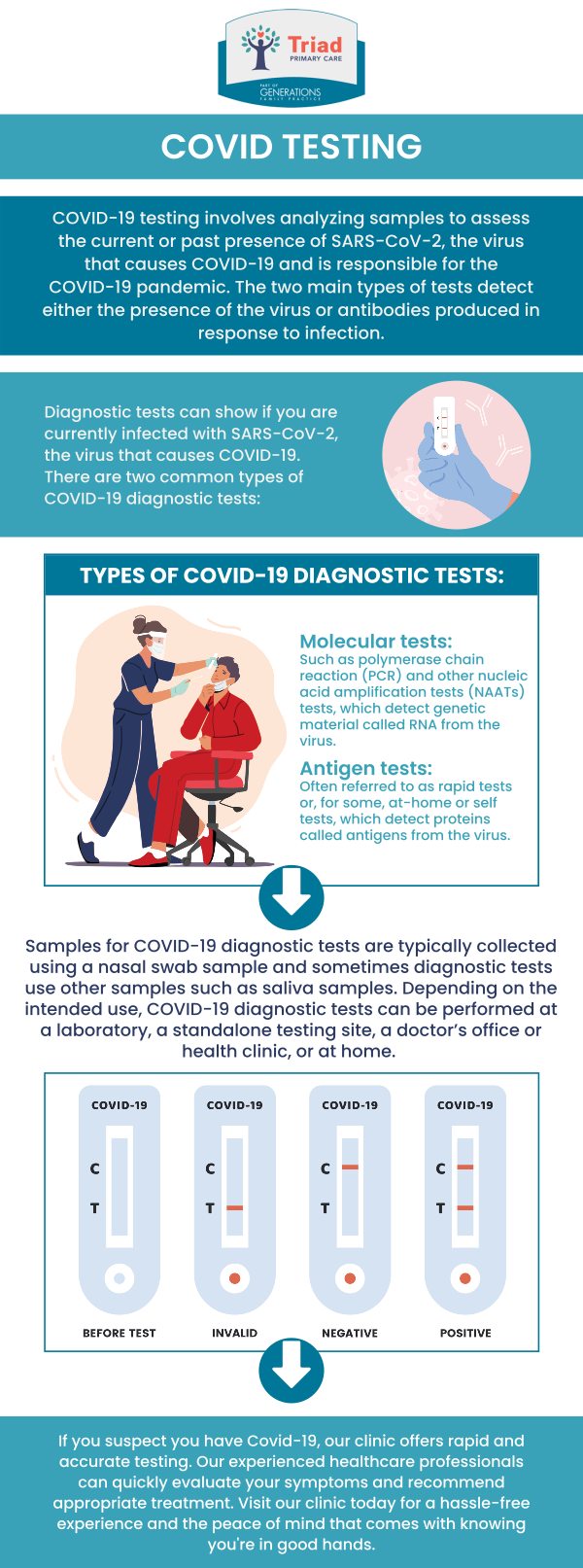
Table of Contents:
Who should consider COVID-19 testing?
What are the primary symptoms of COVID-19 currently observed?
How does a rapid antigen test work, and what are its clinical advantages?
When is a molecular PCR test recommended over a rapid antigen test?
Can I be tested for COVID-19, Influenza, and RSV at the same time (Multiplex Testing)?
What is the optimal timing for taking a COVID-19 test after an exposure?
What should I do if I test negative on a rapid test but still feel sick?
What immediate steps should be taken following a positive test result?
Who is considered at high risk for severe COVID-19 complications?
How does vaccination and booster history affect infection risk and testing?
What red-flag emergency symptoms require immediate emergency room care?
Are COVID-19 tests required for travel, medical admissions, or workplace compliance?
What is the clinical procedure for specimen collection at Triad Primary Care?
How reliable are at-home rapid antigen tests compared to in-clinic professional testing?
What are the current medical recommendations for isolation and returning to public activities?
Schedule Your COVID-19 Testing and Evaluation with Triad Primary Care
Medical References
COVID-19 testing is recommended for anyone presenting with acute upper or lower respiratory symptoms, such as a sore throat, nasal congestion, cough, fever, chills, or unexplained fatigue, regardless of prior infection history or vaccination status. Diagnostic evaluation is also advised for asymptomatic individuals who have had confirmed close contact with an infected individual particularly if they live or work with individuals at high risk for severe illness, such as adults over age 65, oncology patients, or organ transplant recipients.
Furthermore, clinical testing is indicated for pre-operative surgical clearance, routine admission screening to long-term care or congregate living facilities, and individuals preparing for international travel to jurisdictions that mandate documented viral clearance. At Triad Primary Care, we also recommend testing for patients with chronic medical conditions (such as diabetes, cardiopulmonary disorders, or renal disease) at the earliest manifestation of illness so that antiviral therapy can be initiated promptly within the effective therapeutic window.
Because SARS-CoV-2 continues to evolve, clinical presentations range from mild upper respiratory congestion to severe systemic and lower respiratory disease. The most frequently observed symptoms include:
• Low-grade to high-grade fever or recurrent chills
• Persistent dry or productive cough
• Nasal congestion, rhinorrhea (runny nose), and post-nasal drip
• Moderate to severe pharyngitis (sore throat)
• Profound generalized fatigue, malaise, and myalgia (muscle aches)
• Tension-type headaches and sinus pressure
• Shortness of breath or dyspnea upon moderate exertion
• Gastrointestinal distress, including loose stools, nausea, and abdominal cramping
• Partial or complete anosmia (loss of smell) and ageusia (loss of taste), though these occur less frequently with contemporary subvariants than with ancestral strains.
Because these symptoms are clinically indistinguishable from seasonal influenza, respiratory syncytial virus (RSV), and bacterial strep throat, accurate laboratory or diagnostic point-of-care testing is required to establish a precise diagnosis.
A rapid antigen test operates via a lateral flow immunoassay. A clinician collects an anterior nasal swab, which is mixed with an extraction buffer solution to lyse (break open) viral particles and expose internal nucleocapsid proteins. The extracted sample is then applied to a testing strip embedded with specific monoclonal antibodies designed to bind to SARS-CoV-2 proteins. If viral antigens are present in sufficient quantity, a visible conjugated line appears, indicating a positive result.
The primary clinical advantage of rapid antigen testing is speed: results are rendered in 15 to 20 minutes directly within our clinic. When an individual is symptomatic and shedding high amounts of transmissible virus, antigen testing displays high positive predictive value, allowing for immediate patient isolation and prompt clinical intervention.
A molecular PCR test is clinically recommended in the following scenarios:
• Symptomatic Patients with Negative Antigen Results: When a patient presents with classic viral symptoms but tests negative on an initial rapid antigen test, a PCR test is indicated to rule out a false negative caused by early-stage, low-level viral shedding.
• Asymptomatic Exposure Evaluations: Asymptomatic individuals requiring definitive confirmation of their viral status following an exposure benefit from the higher analytical sensitivity of PCR testing.
• Pre-Operative and Clinical Clearances: Surgical facilities, specialized medical units (such as oncology, hematology, and neonatal wards), and institutional settings often require PCR documentation to minimize hospital-acquired transmission risks.
• International Travel and Administrative Mandates: Certain global travel destinations, commercial insurers, and occupational health boards require formal RT-PCR laboratory reports containing specific CLIA certifications and specimen collection timestamps.
Yes. Because COVID-19, Influenza A, Influenza B, and RSV present with nearly identical early clinical profiles, Triad Primary Care utilizes advanced multi-pathogen respiratory panels (multiplex testing). Using a single, minimally invasive nasal swab collection, the multiplex assay evaluates the sample for genetic material or antigens corresponding to all three viral families simultaneously.
Multiplex testing eliminates the diagnostic ambiguity of “guessing” the causative agent during co-circulating viral seasons. Accurately pinpointing the pathogen is critical for therapeutic selection: COVID-19 responds to specific antivirals like Paxlovid, Influenza responds to neuraminidase inhibitors such as oseltamivir (Tamiflu), and RSV primarily requires supportive clinical care and pulmonary monitoring.
The optimal timing for COVID-19 testing depends on whether you have developed clinical symptoms:
• If you develop symptoms: Test immediately upon the appearance of your first symptom, even if mild. A positive test confirms your diagnosis and allows immediate access to treatment.
• If you remain asymptomatic: Testing immediately on Day 1 or Day 2 following an exposure frequently results in a false negative because the virus has not had sufficient time to incubate and replicate to the assay’s limit of detection. The established clinical protocol is to wait at least 3 to 5 full days (with Day 0 being the date of exposure) before administering a diagnostic test. In the interim, you should monitor for symptoms and wear a well-fitted mask around individuals at higher risk of severe disease.
A single negative rapid antigen test does not definitively rule out an active infection, particularly in the initial 24 to 48 hours of illness when viral shedding may not yet have reached the test’s detection threshold. If your rapid test is negative but your symptoms persist or worsen:
• Repeat Antigen Testing (Serial Testing): Per current FDA diagnostic recommendations, perform a repeat rapid antigen test 48 hours after the initial negative test.
• Escalate to PCR Testing: Schedule an appointment at Triad Primary Care for a molecular RT-PCR test, which has far greater sensitivity and can detect very small amounts of viral RNA.
• Evaluate for Differential Pathogens: An infection may be caused by an alternative respiratory virus or bacterial pathogen, such as Group A Streptococcus (strep throat), Parainfluenza, Adenovirus, or Mycoplasma pneumoniae. Our clinicians will conduct a physical exam and targeted testing to identify the exact cause and prescribe the proper course of therapy.
If your test result is positive, take the following clinical and practical steps immediately:
• Isolate: Return home immediately to reduce viral transmission. Confine yourself to a designated room away from other household members and pets, and use a separate bathroom if possible.
• Wear High-Filtration Masks: If you must occupy shared living spaces, wear a well-fitted, certified N95 or KN95 respirator, and improve ventilation by running HEPA filters or opening windows.
• Contact Triad Primary Care: Inform our medical team of your positive result. We will conduct a telehealth or in-clinic clinical assessment to evaluate your risk profile and determine your eligibility for oral antiviral therapies, which must be started within five days of symptom onset.
• Monitor Your Physiological Markers: Rest, drink plenty of fluids, and use an over-the-counter pulse oximeter to track your blood oxygen saturation ($SpO_2$) twice daily. Seek immediate clinical guidance if levels drop below 94%.
Certain patient demographics and clinical comorbidities heighten the risk of severe disease progression, hospitalization, intensive care unit admission, and secondary pulmonary complications. High-risk populations include:
• Adults aged 65 years and older (with risk escalating steeply with advanced age)
• Immunocompromised individuals (e.g., active cancer therapy, solid organ transplants, advanced HIV/AIDS, or long-term systemic corticosteroid or immunosuppressive biologic therapy)
• Individuals with chronic respiratory conditions, including Moderate-to-Severe Asthma, Chronic Obstructive Pulmonary Disease (COPD), Bronchiectasis, and Pulmonary Fibrosis
• Patients with cardiovascular disorders, including coronary artery disease, heart failure, and severe chronic hypertension
• Individuals diagnosed with Type 1 or Type 2 Diabetes Mellitus, or severe metabolic syndrome
• Individuals with Class III Obesity (BMI $\ge 40$)
• Patients with chronic kidney disease (CKD) or end-stage renal disease (ESRD)
• Pregnant and recently postpartum individuals.
• Patients in these categories should be evaluated clinically at the earliest sign of infection, regardless of symptom severity.
Up-to-date COVID-19 vaccinations and booster formulations train the adaptive immune system (specifically memory B-cells and cytotoxic T-lymphocytes) to mount a defense against severe pulmonary and systemic complications. However, because circulating viral variants exhibit structural mutations in their spike proteins, vaccinated individuals can still develop breakthrough infections and transmit the virus to others.
Vaccinated individuals often clear the virus more quickly and frequently mount an aggressive early immune response (presenting with rapid-onset sore throat, fever, or congestion within 24 to 48 hours of exposure). This early immune activity means you may feel acutely symptomatic before the viral load has multiplied to levels detectable by standard rapid antigen tests. Consequently, vaccinated patients who develop respiratory symptoms should still test, and they should follow serial testing protocols if their initial test is negative.
While most individuals with mild to moderate COVID-19 can safely recover at home with symptomatic management or oral antivirals, certain red-flag complications require immediate emergency medical care.
Call 911 or proceed directly to the nearest hospital emergency department if you experience:
• Severe respiratory distress, inability to catch your breath, or breathing that feels uncomfortably rapid and shallow
• Persistent, crushing substernal pain, pressure, or a feeling of heaviness in the chest
• A resting oxygen saturation reading below 90% (or below 92% in patients without underlying chronic pulmonary disease)
• New-onset confusion, cognitive impairment, or an inability to orient yourself
• Inability to awaken, or severe difficulty staying awake during normal hours
• Cyanosis—a pale, gray, or blue discoloration around the lips, tongue, nail beds, or skin
• Severe, intractable vomiting that prevents the retention of oral fluids, leading to clinical dehydration and circulatory compromise.
Although universal federal mandates and blanket public travel restrictions have largely phased out, targeted institutional requirements remain standard across several sectors:
• Elective and Invasive Surgeries: Many surgical centers require proof of a negative PCR test 48 to 72 hours before procedures that involve general endotracheal anesthesia to minimize perioperative pulmonary complications and protect operating room staff.
• Specialized Healthcare Facilities: Cancer infusion centers, inpatient dialysis clinics, and bone marrow transplant units frequently mandate asymptomatic screening for visitors and prospective patients.
• Occupational and Institutional Policies: Specific workplaces—especially healthcare facilities, group residential settings, correctional institutions, and maritime cruise lines—continue to require formal medical clearance before employees or guests return following an exposure or resolved infection.
• International Destination Regulations: Some international sovereign borders still retain testing requirements for unimmunized travelers. Triad Primary Care generates formal, laboratory-verified documentation compliant with international travel and occupational health standards.
To balance diagnostic accuracy with patient comfort, Triad Primary Care uses anterior nasal swab collection protocols for most testing:
• Preparation: The patient blows their nose to clear excess mucus from the nasal passages, and the clinician reviews the testing protocol.
• Swab Insertion: A thin, sterile, flexible swab tipped with synthetic polyester or flocked nylon is gently inserted into the anterior nares (the nostril), approximately 0.5 to 1 inch deep until mild resistance is met.
• Rotation: The clinician rotates the swab firmly against the mucosal wall in a circular motion for 10 to 15 seconds to ensure adequate epithelial cellular collection.
• Bilateral Collection: The exact same swab is then inserted into the second nostril, and the rotation is repeated to guarantee a representative sample.
• Preservation: The swab is either immediately swirled in extraction reagent for point-of-care rapid testing or placed into a sterile vial containing Viral Transport Medium (VTM) and sealed for PCR reference lab transit.
While over-the-counter (OTC) home antigen kits are a convenient initial screening tool, in-clinic professional testing provides higher diagnostic confidence for several reasons:
• Specimen Collection Quality: Up to 30% of at-home false negatives stem from improper collection technique—such as failing to insert the swab deeply enough, rotating it for an inadequate duration, or testing insufficient nasal surface area. Our clinical staff are professionally trained in standardized specimen collection.
• Assay Storage and Chemical Integrity: Home tests are sensitive to temperature and humidity extremes; storing kits in excessively hot cars, unconditioned mailboxes, or humid bathrooms can degrade the active reagents. Clinical facilities store all test kits under continuous, regulated thermal controls.
• Immediate Differential Diagnostics: If a clinic test is negative, our providers can immediately perform confirmatory PCR testing or pivot to differential testing for Strep, Flu, and RSV, preventing diagnostic delays and unnecessary antibiotic prescriptions.
Under updated unified respiratory virus guidance, medical recovery and isolation follow a symptom-based, functional approach rather than a rigid calendar-day mandate:
• Stay Home During Active Illness: Isolate at home away from others while you have acute symptoms (fever, chills, persistent coughing, fatigue, or body aches).
• The 24-Hour Resolution Milestone: You may exit your home isolation and return to regular day-to-day activities once two distinct milestones have been met:
Your fever has been completely gone for at least 24 consecutive hours without using fever-reducing medications (such as acetaminophen, ibuprofen, or naproxen).
Your overall symptoms have been consistently improving for at least 24 hours (e.g., cough has significantly lessened, congestion is clearing, and stamina has improved).
• Five Days of Enhanced Precautions: Once you resume public activities, you should practice enhanced respiratory precautions for the subsequent 5 days: wear a well-fitted, certified mask (N95 or KN95) around others indoors, optimize physical distancing, maintain frequent hand hygiene, and avoid contact with medically vulnerable individuals.
How long will it take to receive my results?
Many rapid antigen tests give results in about 15 to 30 minutes. Molecular test timing varies: some are performed quickly, while samples sent to a laboratory take longer. Ask Triad Primary Care for the expected turnaround and how results will be shared before testing.
Should I get tested if I recently had COVID-19?
Tell the clinician if you tested positive within the past 90 days. PCR tests can stay positive during that period, even after recovery, and reinfection is possible. An antigen test is often preferred when testing is needed. If your first positive result was within 30 days and you have no symptoms, CDC does not recommend testing to look for a new infection.
Can an antibody test tell me whether I am protected?
No. Antibody blood tests cannot diagnose a current COVID-19 infection or reliably show whether you are protected from another infection. They should not be used to determine whether a vaccine worked or whether you need vaccination.
Do I need an appointment, and will insurance cover testing?
Contact Triad Primary Care before visiting to confirm scheduling, current test availability, and instructions for patients with symptoms. Ask the practice and your insurer about any testing and office-visit charges. Coverage and out-of-pocket costs depend on your plan and the services provided.
When should I seek emergency care?
Call 911 for trouble breathing, persistent chest pain or pressure, new confusion, difficulty waking or staying awake, or pale, gray, or blue lips, skin, or nail beds, depending on skin tone. Seek prompt medical advice for other severe or concerning symptoms.
Is it possible to have COVID-19 without exhibiting a fever?
Yes. A significant percentage of confirmed COVID-19 patients do not develop an elevated body temperature. An individual’s immune response varies based on baseline health, prior immunity, and age:
Vaccinated or previously infected individuals often mount targeted, localized mucosal immune responses that clear or contain the pathogen without triggering a systemic pyrogenic (fever-inducing) response.
Whether you need a rapid test, a full multi-virus respiratory panel, or evaluation for antiviral treatment, Triad Primary Care provides comprehensive care in a familiar clinical setting.
Address: 1309 Lees Chapel Rd., Greensboro, NC 27455
Phone: (336) 439-6935
Serving Patients Throughout: Greensboro, Browns Summit, Summerfield, Oak Ridge, McLeansville, and surrounding Piedmont Triad communities.
CDC. Testing for COVID-19
FDA. At-Home COVID-19 Diagnostic Tests: Frequently Asked Questions
FDA. Understanding At-Home OTC COVID-19 Antigen Diagnostic Test Results
CDC. Preventing Spread of Respiratory Viruses When You’re Sick
CDC. Types of COVID-19 Treatment
CDC. Symptoms of COVID-19
FDA. Antibody (Serology) Testing for COVID-19: Information for Patients and Consumers
Check Out Our 5 Star Reviews



Additional Services You May Need
▸ Covid-19 Testing
▸ Medical Weight Loss
▸ Physical Exams
▸ Addiction Treatment
▸ Primary Care
▸ Lab Testing



 Send Text
 How May I Help You?
