
When Do Symptoms of Opioid Addiction Become Difficult to Ignore?
The shift is not always dramatic. A person may first notice that opioid use occupies more of their attention or that reducing use has become unexpectedly difficult. Over time, missed obligations, changes in relationships, altered sleep, increasing tolerance, or withdrawal symptoms may make the pattern harder to dismiss. At Triad Primary Care, our team can evaluate these concerns within the context of each patient’s overall health. For more information, contact us or book an appointment online. We are conveniently located at 1309 Lees Chapel Rd, Greensboro, NC 27455.
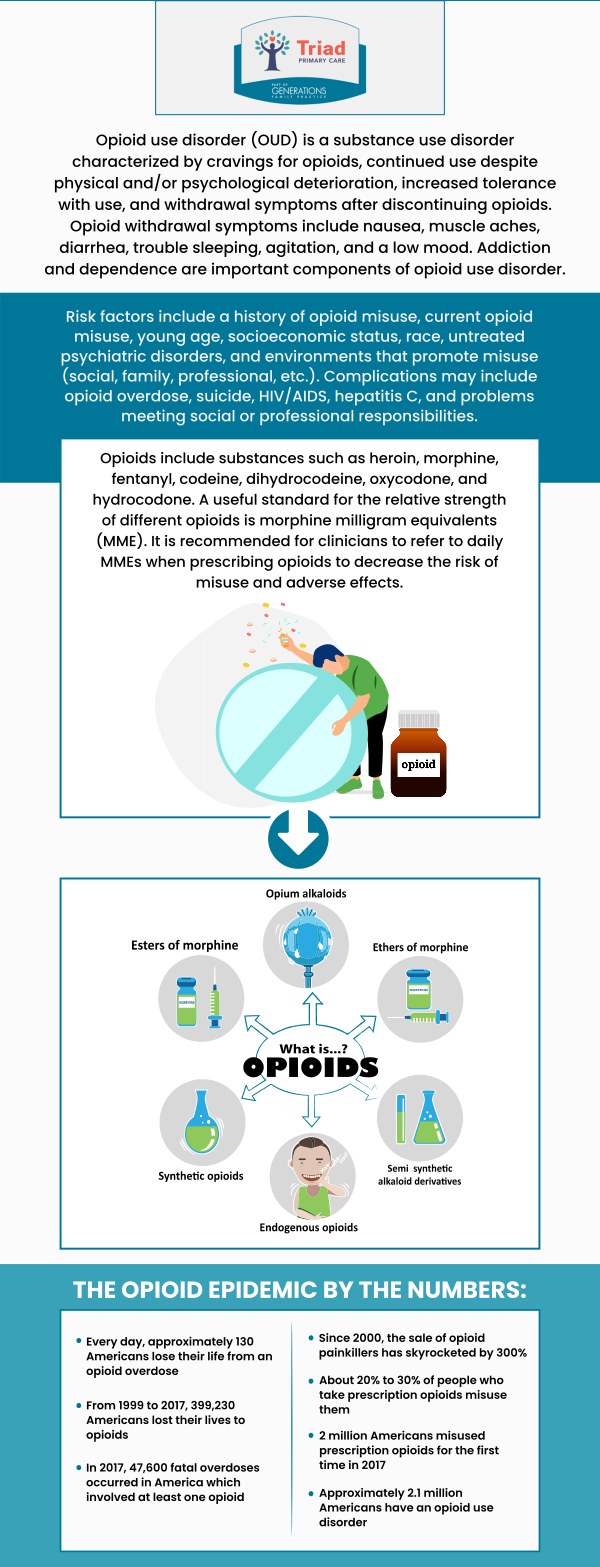
Table of Contents:
What symptoms of opioid addiction may become more noticeable as opioid use continues?
How can changes in mood and behavior indicate worsening opioid addiction?
When can opioid addiction begin interfering with work, relationships, and daily responsibilities?
What physical changes may become difficult to overlook with opioid addiction?
When do increasing symptoms of opioid addiction indicate the need for professional care?
How does Triad Primary Care support patients when symptoms of opioid addiction begin affecting daily life?
As opioid use becomes more established, certain patterns may become increasingly apparent. A person might use opioids more often than intended, take larger amounts, spend considerable time obtaining or thinking about them, or continue using even after recognizing negative consequences.
Another significant change is difficulty cutting back. Someone may make repeated attempts to reduce their use but find themselves returning to the previous pattern. Tolerance and physical dependence can also develop with repeated exposure, although physical dependence by itself does not necessarily mean a person has an opioid use disorder.
At Triad Primary Care, our team can review these patterns with patients and help determine whether an evaluation for opioid-related concerns is appropriate.
Changes in personality or emotional responses can sometimes accompany problematic opioid use. A person may become more irritable, anxious, withdrawn, secretive, or preoccupied with when and where they will obtain or use opioids. Interests and activities that once mattered to them may gradually receive less attention.
These changes are not automatically caused by addiction. Sleep problems, depression, anxiety, chronic pain, and other health conditions can produce similar behavioral shifts. What matters is whether the changes occur alongside a growing pattern of uncontrolled opioid use or consequences related to that use.
At Triad Primary Care, our team considers emotional and behavioral changes alongside the patient’s substance-use history rather than viewing them separately.
Interference can develop when obtaining, using, or recovering from opioid effects begins taking precedence over ordinary commitments. A person may arrive late to work, miss appointments, neglect household responsibilities, or have difficulty maintaining previously reliable routines.
Relationships may also become strained. Family members or friends may notice secrecy, broken commitments, financial problems, or repeated disagreements connected to opioid use. Continuing the pattern despite these consequences can be an important warning sign.
At Triad Primary Care, our team asks how opioid use is affecting the patient’s actual day-to-day life because functional changes can help provide a clearer picture of the problem.
Physical effects can vary depending on the opioid, amount used, duration of use, and the individual’s health. Drowsiness, reduced alertness, constipation, nausea, changes in sleep, and slowed physical responses can occur. With repeated use, tolerance and physical dependence may also develop.
Withdrawal can become another noticeable part of the cycle when a dependent person reduces or stops opioid use. Symptoms can include restlessness, sweating, muscle aches, gastrointestinal upset, anxiety, and difficulty sleeping. Severe breathing problems or an inability to wake someone can indicate an overdose and require emergency intervention.
At Triad Primary Care, our team can assess physical symptoms and consider whether they may be connected to opioid use or another medical issue.
Professional care should be considered when opioid use feels increasingly difficult to control, attempts to reduce use repeatedly fail, or substance use begins producing problems at work, home, financially, or within relationships. A person does not need to wait until every possible symptom appears before asking for help.
Immediate emergency assistance is necessary when an individual may be experiencing an opioid overdose. If someone is unresponsive, cannot be awakened, or has very slow, irregular, or absent breathing, call 911 and administer naloxone if available and appropriate.
At Triad Primary Care, our team can provide an evaluation when opioid-related symptoms or changes in daily functioning become concerning.
Our team approaches opioid-related concerns by examining the circumstances surrounding the patient’s substance use rather than judging the person based on a single symptom. We can discuss current opioid use, previous attempts to change the pattern, physical symptoms, mental well-being, medical history, and the ways substance use may be affecting everyday responsibilities.
This broader perspective can help clarify the type of support that may be appropriate. Depending on the individual’s circumstances, care may involve medical management, monitoring, behavioral support, or coordination with additional addiction-treatment resources. The appropriate path depends on the patient’s clinical needs and safety.
At Triad Primary Care, our team supports patients in Greensboro, NC, when opioid addiction symptoms begin disrupting daily life, providing individualized care focused on health, safety, and meaningful recovery goals. For more information, contact us or book an appointment online. We are conveniently located at 1309 Lees Chapel Rd, Greensboro, NC 27455. We serve patients from Greensboro NC, Browns Summit NC, McLeansville NC, Oak Ridge NC, Summerfield NC, and surrounding areas.
Check Out Our 5 Star Reviews



Additional Services You May Need
▸ Covid-19 Testing
▸ Medical Weight Loss
▸ Physical Exams
▸ Addiction Treatment
▸ Primary Care
▸ Lab Testing



 Send Text
 How May I Help You?
